Meningitis is an inflammation of the membranes surrounding the brain and spinal cord. This disease has a very high mortality rate. If fortunate to survive, patients often suffer from severe lifelong disabilities.
Global Incidence and Mortality
According to the Global Burden of Disease (GBD) study, deaths have slightly decreased. Specifically, the data fell from 403,012 cases (1990) to 318,400 cases (2016). However, new cases increased from 2.5 million to 2.82 million during the same period.
The greatest disease burden lies in the African “meningitis belt”. This region accounts for 6 out of 10 countries with the highest incidence and mortality. Most deaths stem from infectious causes. Disease severity depends on the specific pathogen.
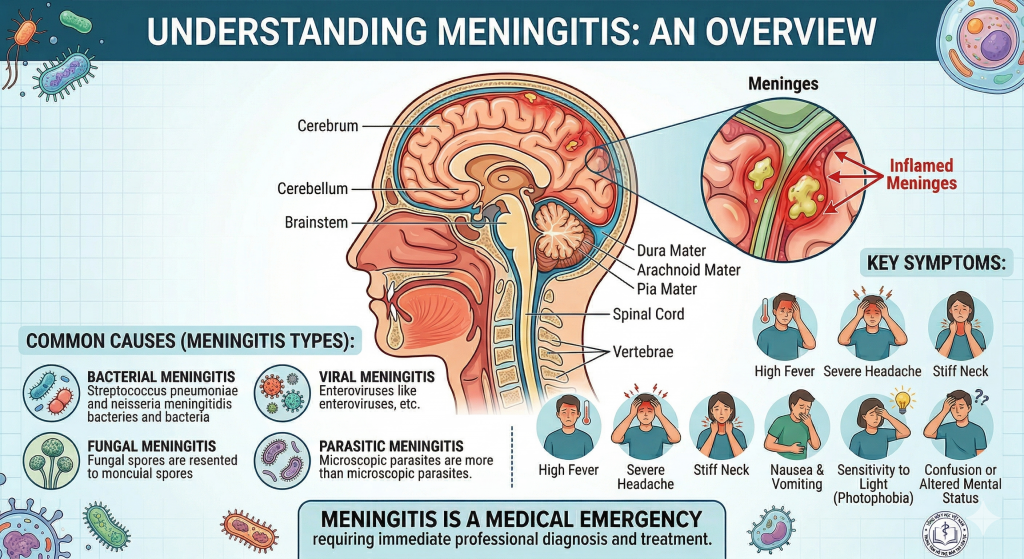
Overview of meningitis
Causes and Epidemiological Trends
Currently, meningitis is mainly caused by three pathogens:
- Haemophilus influenzae type b (Hib): This was the most common cause in 1990, with 780,070 cases. By 2016, cases dropped significantly to 397,297.
- Meningococcus: This pathogen leads in both deaths and new cases. There were 136,423 deaths and 1.25 million new cases in 2016.
- Pneumococcus: This agent causes a massive disability burden. In 2016, there were 634,458 cases caused by pneumococcus. This bacterium leaves long-lasting and severe consequences for patients.
Clinical Signs and Symptoms
Meningitis symptoms usually appear suddenly and progress rapidly. Patients often suffer from high fever, severe headache, and stiff neck. Additionally, patients may experience nausea, vomiting, and photophobia.
Infants may show a bulging fontanelle, poor feeding, or constant crying. In severe cases, patients may fall into a lethargic or comatose state. The appearance of a purpuric rash on the skin is a dangerous warning sign. Patients require immediate medical emergency care.
Consequences and Disability Burden
Bacterial meningitis progresses very rapidly and can cause early death. The disease leaves many severe sequelae for survivors. Complications include cognitive impairment, behavioral disorders, and hearing loss. Patients may also suffer from motor weakness, loss of coordination, or seizures.
In 2016, the world lost 1.48 million years lived with disability (YLD) due to this disease. Total disability-adjusted life years (DALYs) reached 21.87 million. The disease causes an enormous economic and psychological burden on families and society.
Proposed Interventions and Solutions
The burden of meningitis currently remains very high. Disease prevention progress is lagging behind other vaccine-preventable diseases. Therefore, proactive and continuous surveillance is extremely important. This helps accurately track global disease trends.
We must focus on developing vaccines with broader coverage. Providing affordable vaccines to high-risk countries is a crucial task. Simultaneously, patients must have access to low-cost diagnostic and treatment methods. Rehabilitation support for people with disabilities must also be a top priority.
Center for Support and Continuous Education