Implementing the joint resolution between the Vietnam Medical Association and the Ministry of Health, the training program took place successfully. The program was held in Cao Bang province on November 19, 2025. The content focused on updating knowledge regarding non-communicable diseases (NCDs). This is a disease group with a high mortality rate and causes a significant economic burden. This activity plays a key role in improving skills for medical staff. Early detection helps minimize complications for patients.
The importance of non-communicable disease management
Prof. Dr. Nguyen Van Kinh presented in detail the status of NCDs in Vietnam. He emphasized that cancer, cardiovascular diseases, and chronic obstructive pulmonary diseases are increasing rapidly. The report pointed out challenges in accessing medical services in remote areas. An important solution is to strengthen active screening right at the commune/ward health level. Doctors need to focus on exploiting medical history and risk factors. The management of electronic health records is also an effective support tool.
Burden and solutions for early detection of non-communicable diseases
In the next thematic session, the Lecturer guided on the integrated treatment process. Hypertension and diabetes often accompany each other in the same patient. Therefore, treatment requires close coordination and periodic monitoring. The reporter shared the latest protocols according to the Ministry of Health’s guidelines. Delegates were updated on how to adjust drug dosages and handle emergencies. The most important goal is to maintain safe blood pressure and blood glucose indices.
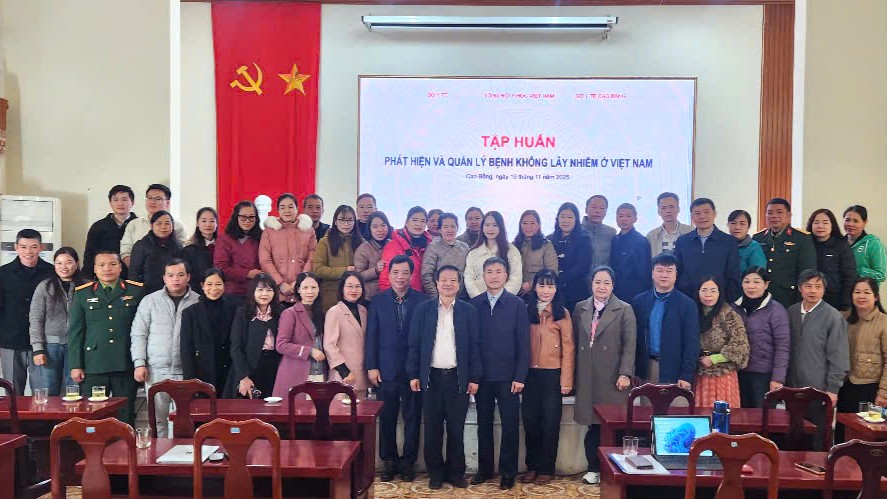
Lecturers and trainees participating in the training program in Cao Bang (November 19, 2025)
Integrated management of hypertension and diabetes in the community
Dr. Truong Hong Son provided practical knowledge about diet. Nutrition plays an important role in controlling the progression of the disease. The report focused on building menus suitable for the locality. Patients need to limit salt, sugar, and saturated fats daily. At the same time, encouraging people to engage in physical activity was also clearly mentioned. Medical staff need to consult thoroughly so that patients can change their lifestyles.
Guidance on nutritional regimen and patient care
The training program attracted more than 200 delegates who are doctors in the province. Trainees actively discussed and shared practical difficulties at their units. The success of the program is a premise for subsequent training sessions. The Vietnam Medical Association commits to continuing to accompany local healthcare. This knowledge will be applied immediately to medical examination and treatment work. This contributes to realizing the goal of protecting and improving people’s health.
Center for Support & Continuing Education