Current status of nutrition, health of the elderly and proposed solutions (Scientific Seminar 2025)
On November 27, 2025, at the scientific seminar “Current status of nutrition and health of the elderly in some major cities and proposed solutions”, the Vietnam Institute of Applied Medicine announced the latest research results. These results point out major challenges in healthcare for the elderly in major cities today.
The seminar was chaired by Assoc. Prof. Dr. Nguyen Thi Xuyen – President of the Vietnam Medical Association. The program featured presentations from many leading professors and doctors in the fields of medicine, geriatrics, and nutrition.
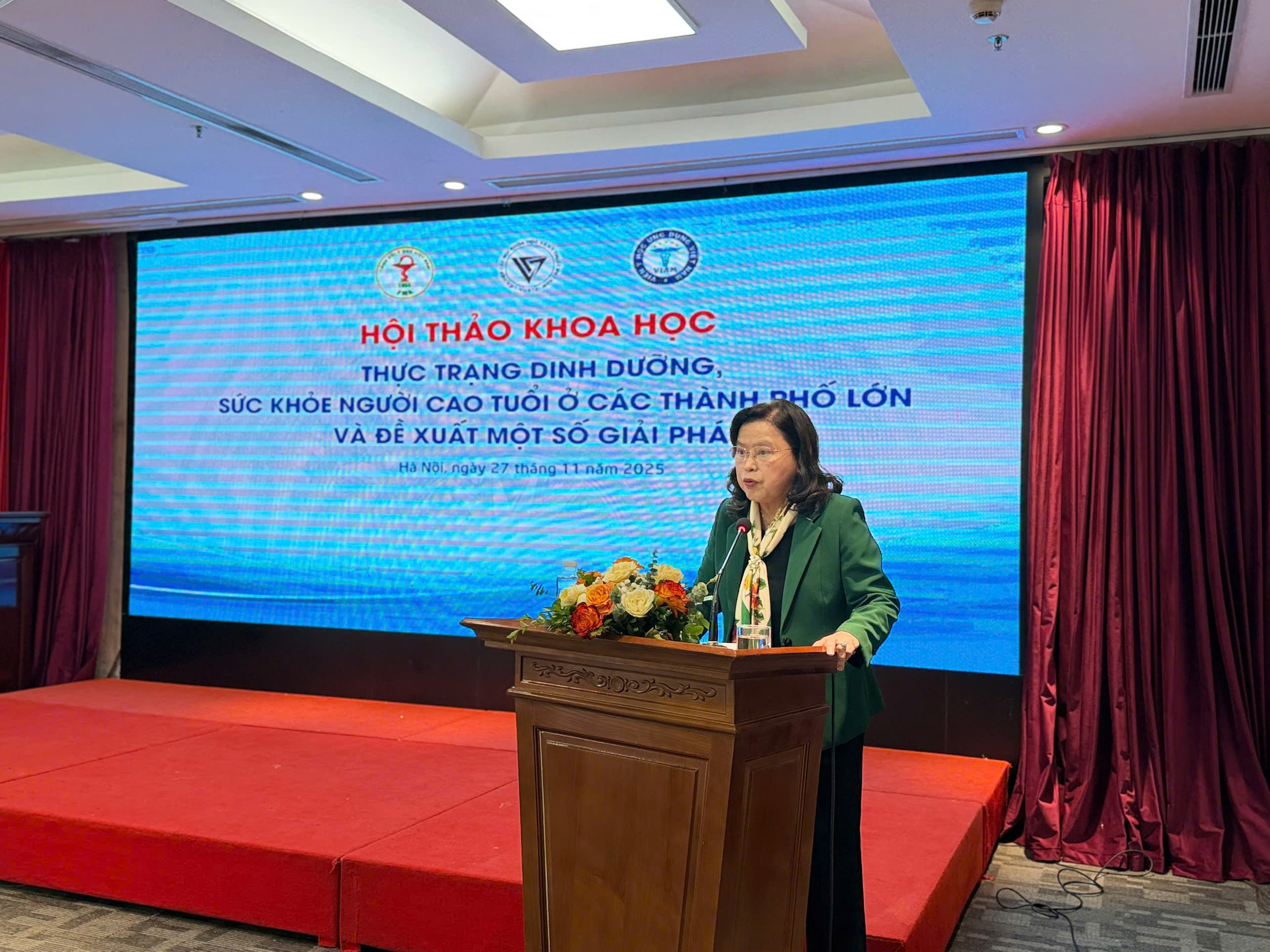
Assoc. Prof. Dr. Nguyen Thi Xuyen – President of the Vietnam Medical Association speaking at the Seminar
Alarming status of elderly health in urban areas
Research by the Vietnam Institute of Applied Medicine conducted in Hanoi and Ho Chi Minh City in 2025 pointed out a worrying reality. The nutritional status and health of the elderly are facing many issues, including overweight, obesity, and chronic diseases.
Specifically, the obesity rate among the elderly in these two cities reached 33.2%. Notably, 87.7% of survey participants suffered from at least one chronic disease. On average, each person faces two or more pathologies. Among them, the most common are hypertension, dyslipidemia, and musculoskeletal diseases.
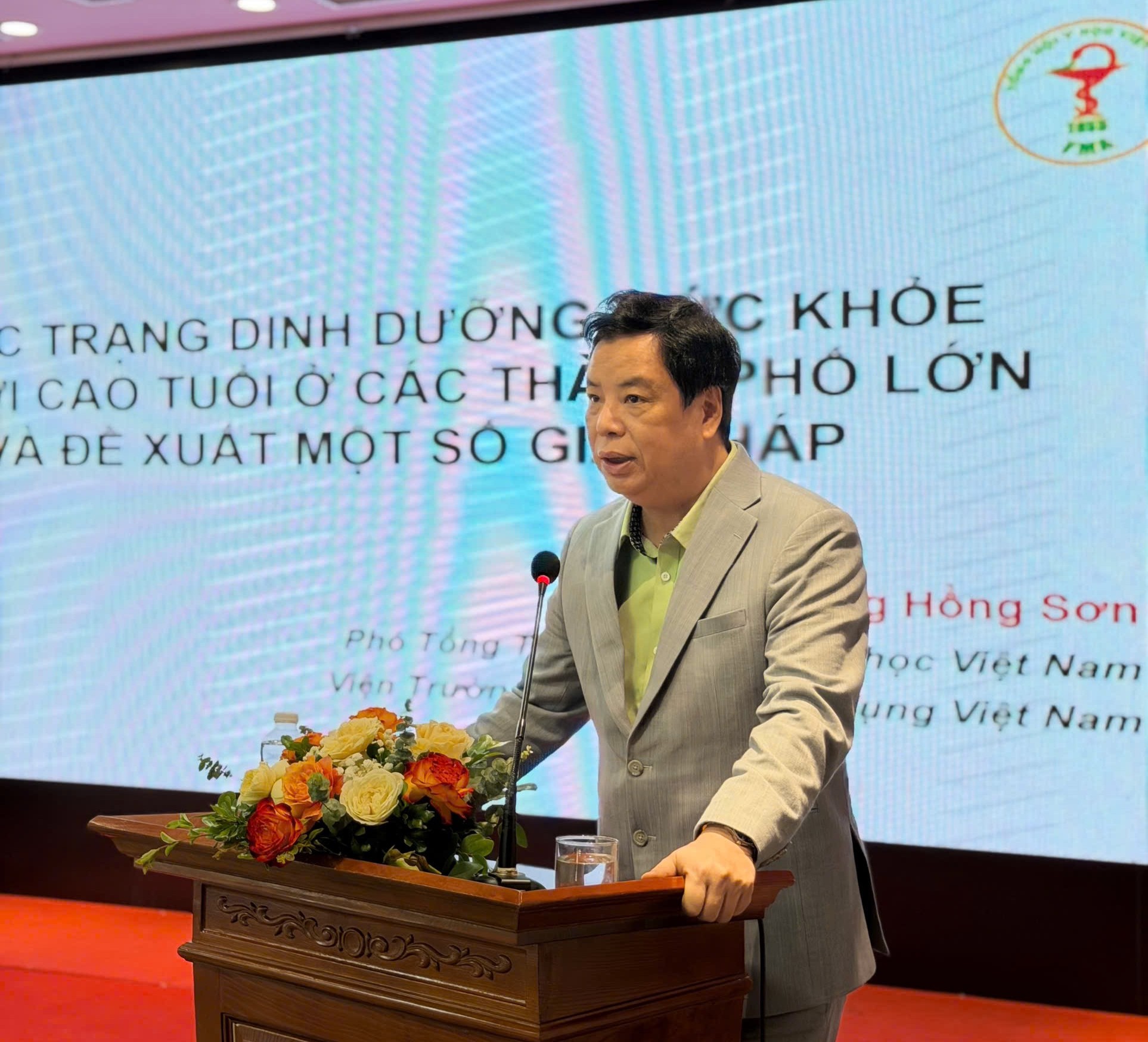
Dr. Truong Hong Son – Deputy Secretary General of the Vietnam Medical Association, reporting research results
Serious imbalance in nutritional regimen
The research also pointed out major inadequacies in the daily diet of the elderly:
- Only 25% of the elderly surveyed ate enough of the 5 essential food groups.
- Only about 40% of the elderly consumed high-nutrient foods such as milk and dairy products. These are very important sources of calcium and protein.
Conversely, eating habits harmful to health are quite common. The consumption rate of high-risk foods such as salty foods, fried foods, and foods high in simple sugars reached 40-60%. These are factors that directly impact the control of metabolic pathologies. This creates a vicious cycle of disease that is hard to break.
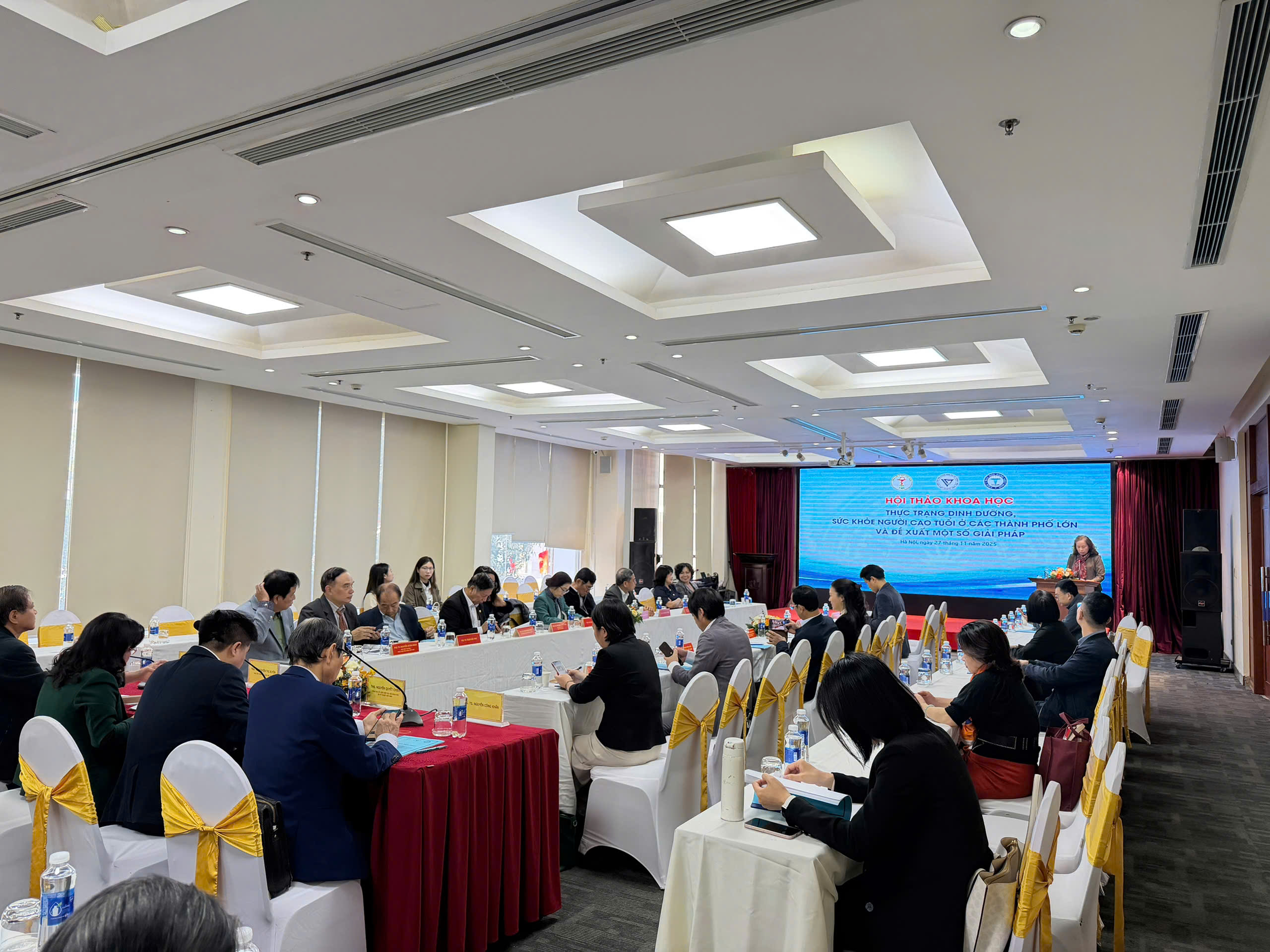
Scene of the seminar
Policy orientation and intervention solutions
At the seminar, experts frankly acknowledged the reality in localities. Healthcare activities for the elderly in many places are still formalistic. The current system has not truly met the increasing healthcare needs.
Given the rapid population aging speed, medical experts agreed to propose the following synchronous solution groups:
- Building specialized human resources: Strengthen medical human resource training. Include elderly healthcare content in the formal medical education curriculum. Organize short-term training courses for doctors, nurses, and social workers.
- Promoting inter-sectoral coordination: Strengthen cooperation between the health sector, social security, and scientific research. The goal is to build a comprehensive policy framework on population aging.
- Investing in grassroots healthcare: Upgrade facilities for commune/ward health stations. It is necessary to promote the role of grassroots healthcare as a health management point right in the community.
- Perfecting professional guidelines: Strengthen the issuance of circulars and detailed guidelines on elderly healthcare. Ensure consistent implementation from Central to local levels.
- Developing a geriatric health network: Build a multi-layered network from central hospitals to commune health stations. Promote the role of provincial CDCs in preventing chronic diseases.
The seminar affirmed that nutritional and health care for the elderly is a task for the whole society. Joint efforts are needed to improve the quality of life for this rapidly growing population group.
Center for Support & Continuing Education