According to the report from the Hanoi Department of Health at the meeting on March 30, 2026, the infectious disease situation in the city is showing new developments that require high concentration from management levels and citizens. Although the overall epidemic remains under control, some infectious diseases, especially hand, foot, and mouth disease, are showing a sudden increase in case numbers and outbreak scale.
The situation of hand, foot, and mouth disease in Hanoi in the first quarter of 2026
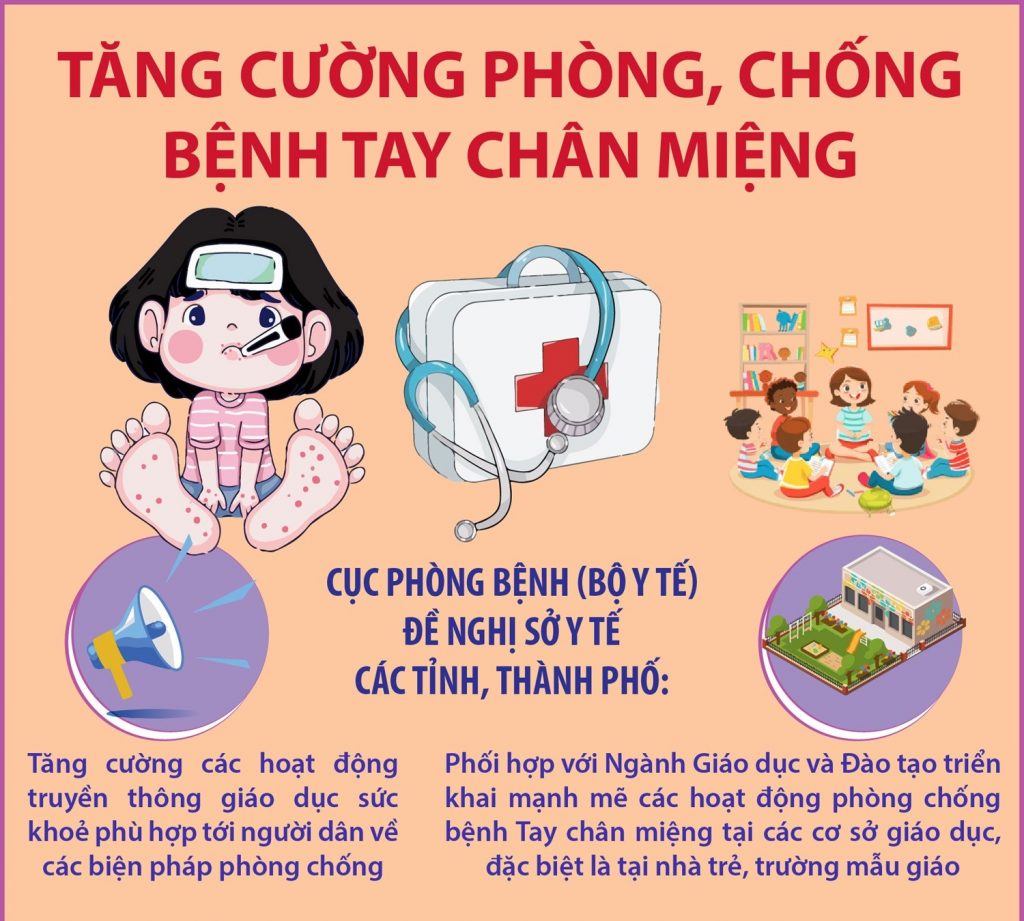
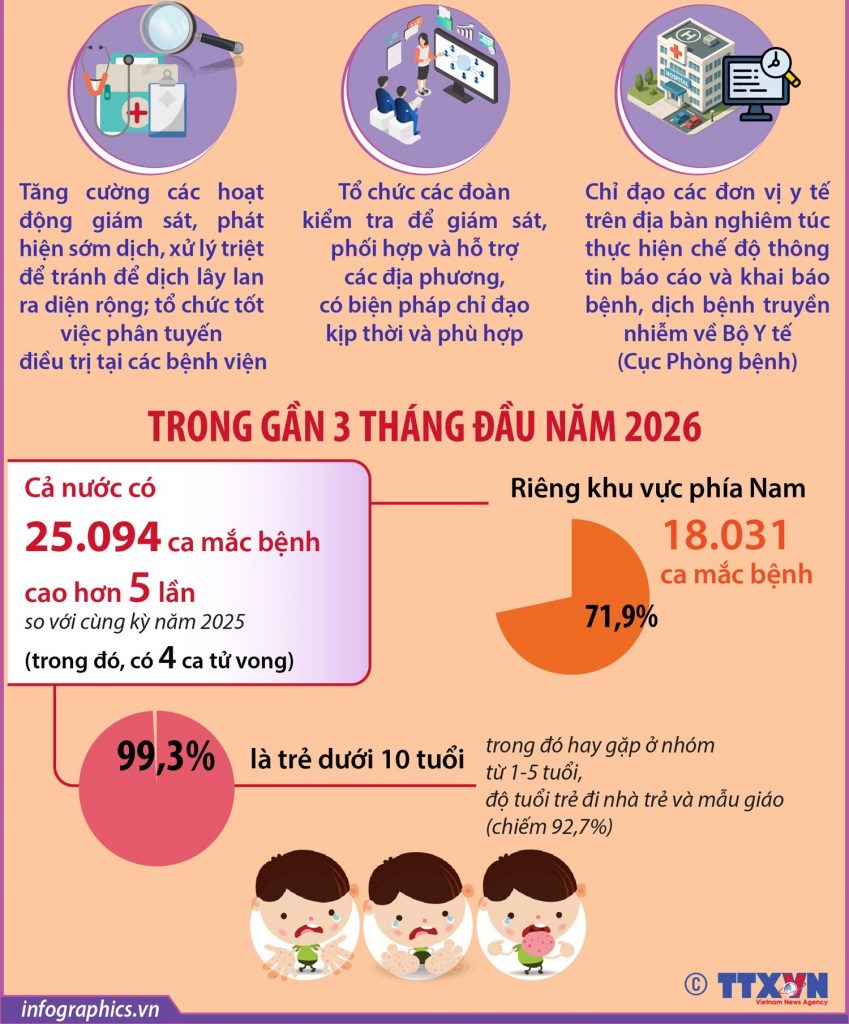
From the beginning of 2026 to the present, the city recorded 1,320 cases of hand, foot, and mouth disease, an increase of 2.3 times compared to the same period in 2025. The disease has appeared in 126 communes and wards with 24 outbreaks. Notably, up to 21 outbreaks erupted in preschools and kindergartens. This is a warning bell about controlling hygiene and disease prevention in the school environment, where young children frequently have close contact and share personal items.
Risk factors and the co-occurrence of other epidemic diseases
Besides hand, foot, and mouth disease, dengue fever also recorded 181 cases. Although this number decreased slightly compared to the previous year, epidemiological experts forecast a high risk of an outbreak due to the 3-year epidemic cycle (calculated from the large outbreak in 2023) and favorable weather conditions for the disease-transmitting vector to develop. In addition, the pressure from rabies outbreaks in dogs and imported diseases such as Mpox also requires the health system to always be on high alert.
Enhancing the role of school health in epidemic prevention
To block the source of infection, the city identifies school health as a solid “fortress”. General environmental sanitation and disinfection campaigns have been conducted in more than 100 communes and wards, with a focus on kindergarten classes. Organizing 299 training classes for over 13,000 school health officials aims to equip teachers with skills for early disease detection, helping to handle suspected cases promptly.
Shifting the mindset towards proactive, early, and remote disease prevention
In the spirit of Resolution 72 of the Politburo, the City People’s Committee emphasized the strong shift from “fighting the epidemic” to “preventing the disease”. Localities must urgently complete disease prevention and control plans, allocating full resources and funding before April 15. For dengue fever, campaigns to kill mosquito larvae, release fish, and reserve Chloramine B disinfectant chemicals at the CDC and commune/ward health stations need to be implemented drastically, avoiding passivity when the epidemic breaks out.
Ensuring food safety and facility monitoring
Educational institutions need to immediately implement measures to prevent and control hand, foot, and mouth disease, while being ready to respond to dengue fever. The city requires building and replicating exemplary models of ensuring food safety in boarding kitchens. Controlling the quality of school food is an urgent task to protect students’ health, especially in the context of infectious diseases trending increasingly complicatedly.
Center for Support & Continuing Education – According to the Vietnam Ministry of Health