Hepatocellular carcinoma (HCC) has a very high mortality rate. The main reason is that the tumor invades and metastasizes rapidly. Modern medicine is heading towards treatments at the molecular level. Among these, cell division cycle 20 (CDC20) is of particular interest. Understanding the activity of CDC20 opens up great opportunities. It helps develop targeted therapies for liver cancer patients.
CDC20’s Mechanism in Promoting Tumor Progression
Physiologically, CDC20 regulates the cell cycle. It helps control the mitosis process of cells. However, in liver cancer, CDC20 is abnormally highly expressed. At this time, CDC20 acts as an oncogene. This increase is often accompanied by a very poor prognosis.
The core mechanism of CDC20 is activating the epithelial-mesenchymal transition (EMT). The EMT process causes cells to lose their initial benign characteristics. Cancer cells have a reduced capacity for tight adhesion. Instead, they take on the characteristics of mesenchymal cells. As a result, the tumor proliferates strongly. They easily invade adjacent tissues and penetrate blood vessels to metastasize distantly.
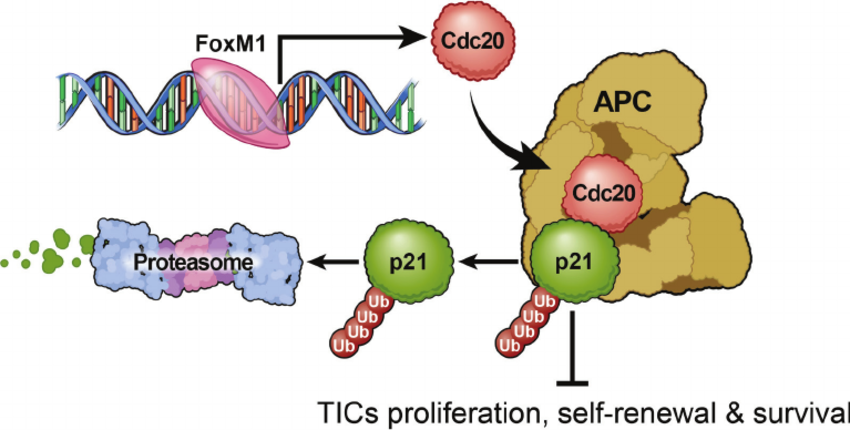
Mechanism of CDC20 in cancer treatment
Effects of Inhibiting CDC20 in Treatment
Based on pathology, CDC20 is not just a prognostic marker. It has become a promising therapeutic target. Inhibiting CDC20 shows a very positive tumor control effect. When this gene is inhibited, the EMT reaction chain will be disrupted. The transformation process of cells can even be reversed.
This reduces the motility and invasiveness of malignant cells. At the same time, the tumor proliferation rate is significantly restrained. This inhibitory effect brings great clinical significance. It helps effectively prevent and control the risk of metastasis. This is originally the cause of failure in older treatment regimens.
Clinical Significance and Prospects
Targeting CDC20 is an important step in oncology. It provides a solid foundation for developing new-generation drugs. Personalized medicine is combining CDC20 evaluation to prognosticate the disease. Using specific inhibitors of this gene brings great expectations.
This method promises to optimize multimodal treatment regimens. From there, doctors can control metastasis better. Hepatocellular carcinoma patients will have their lives prolonged and their quality of life improved.
Center for Support & Continuing Education